
Home Theater Media Rooms
Home Theater and Media Room Design, Thoughtfully Integrated
A great home theater is not defined by a screen size or a list of equipment. It is a room designed around the way you watch, listen, gather, and live—where audio, video, acoustics, lighting, and control work together without taking over the architecture.
Home Technology Experts designs home theaters and media rooms for homes across the Hamptons, Long Island, and Manhattan. Whether the goal is a purpose-built cinema or a refined family room that becomes exceptional at movie time, the experience should feel immersive, comfortable, and simple to use.
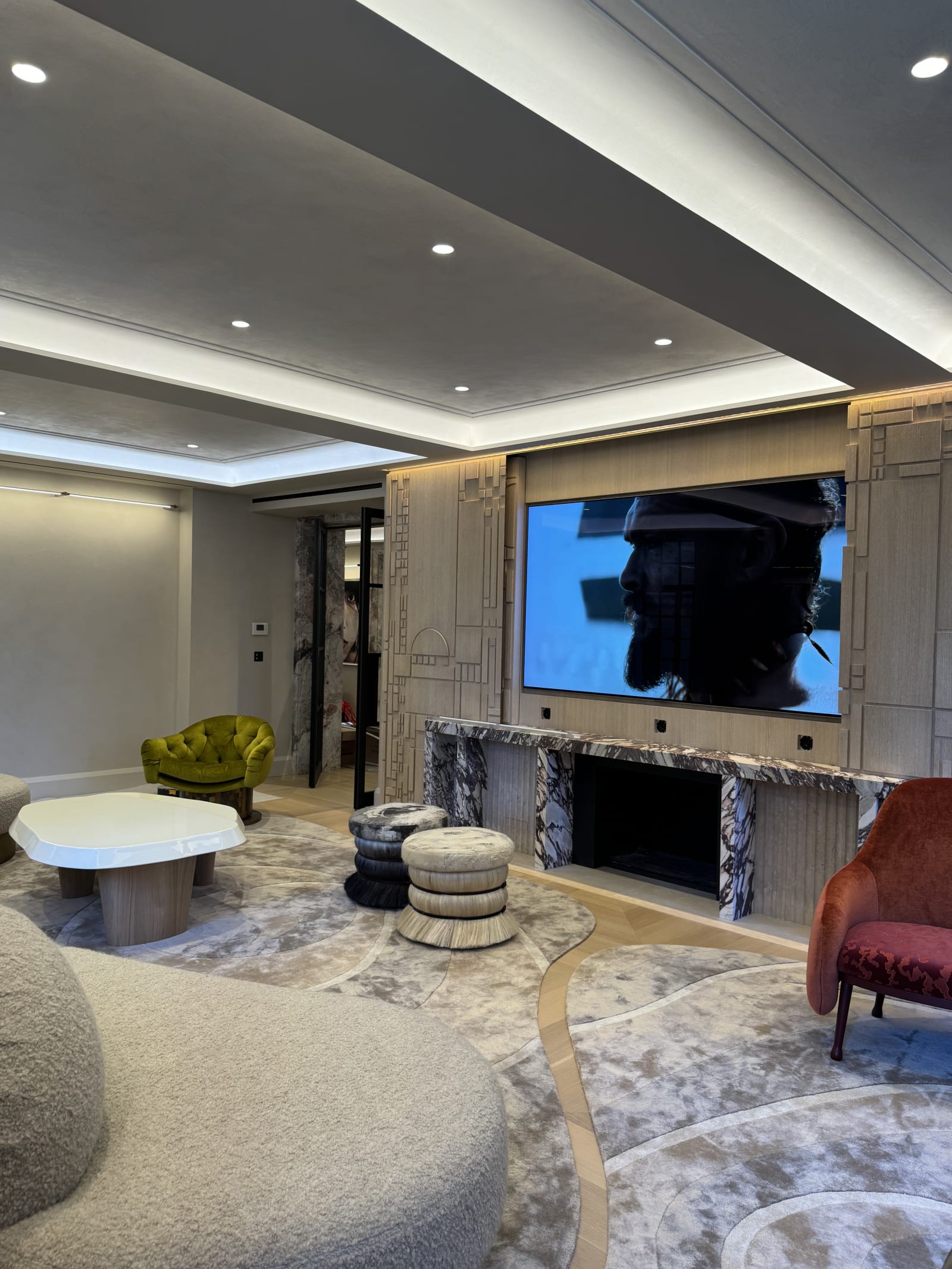
Dedicated Theater or Media Room?
The right format depends on the home and how the room will be used. A dedicated theater gives the design team greater control over sightlines, sound isolation, screen size, and ambient light. A media room is often a more flexible shared space—part family room, part screening room, and part everyday place to relax.
A dedicated theater is often the best fit when the priority is:
- Purpose-built acoustic and lighting control
- Projection, large-format viewing, and immersive surround sound
- Dedicated seating and a cinematic environment
A media room can be the better fit when the priority is:
- Everyday television, entertaining, and family use
- Strong performance without a room that feels overly technical
- Discreet displays, architectural speakers, and flexible furnishings
Both approaches benefit from careful coordination with the interior design, electrical plan, and lighting control from the beginning.
Performance Starts With the Room
The performance of a theater or media room is shaped long before the equipment is installed. Room proportions, seating distances, speaker placement, reflective surfaces, lighting conditions, and adjacent rooms all affect the experience. The goal is clear dialogue, balanced sound, comfortable viewing, and technology that remains easy to operate.
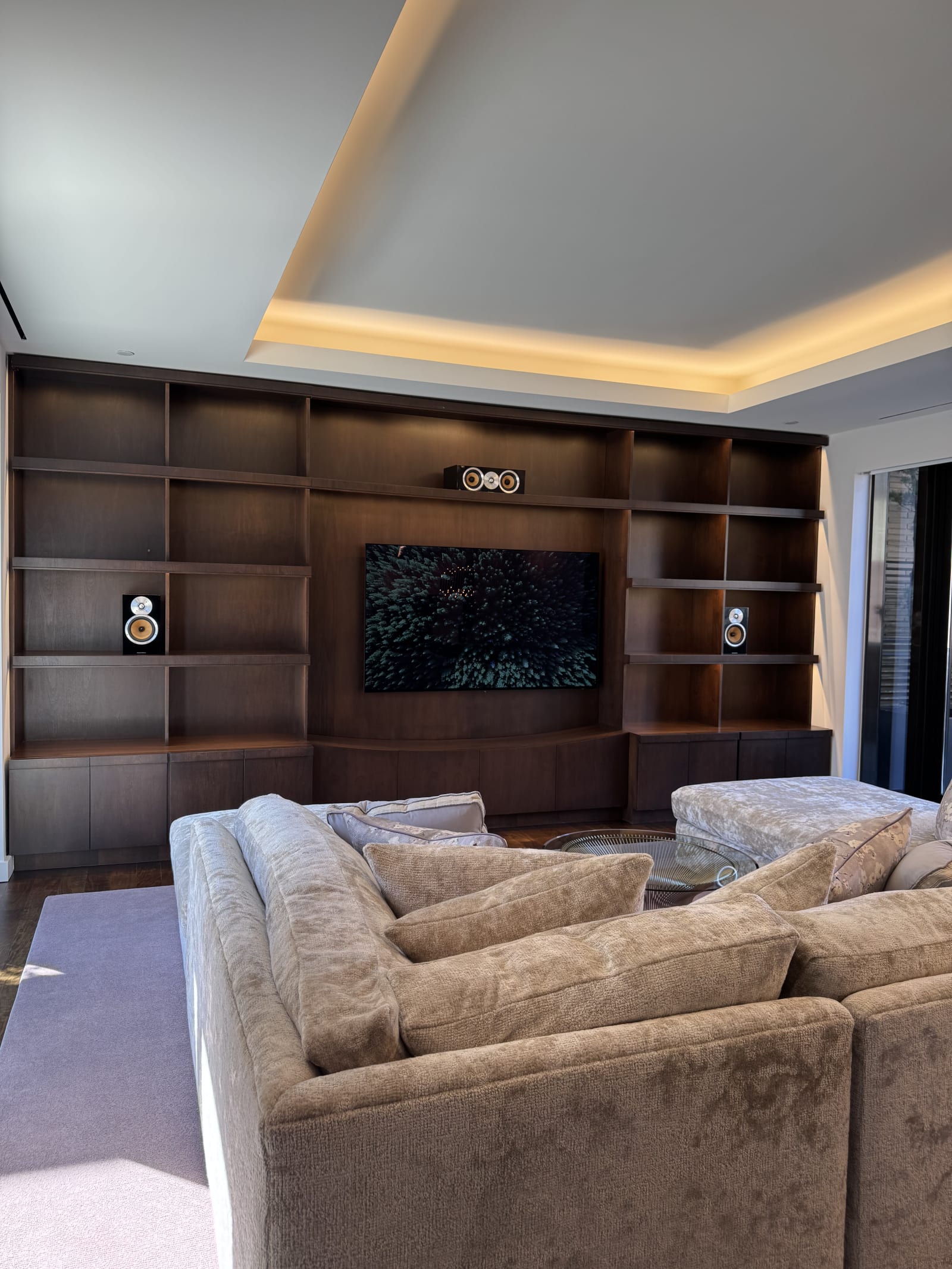
That is why HTE designs audio/video systems as part of the room—not as a collection of products placed into it. Architectural speakers, displays, projectors, source equipment, and controls should be selected after the room’s purpose and constraints are understood.
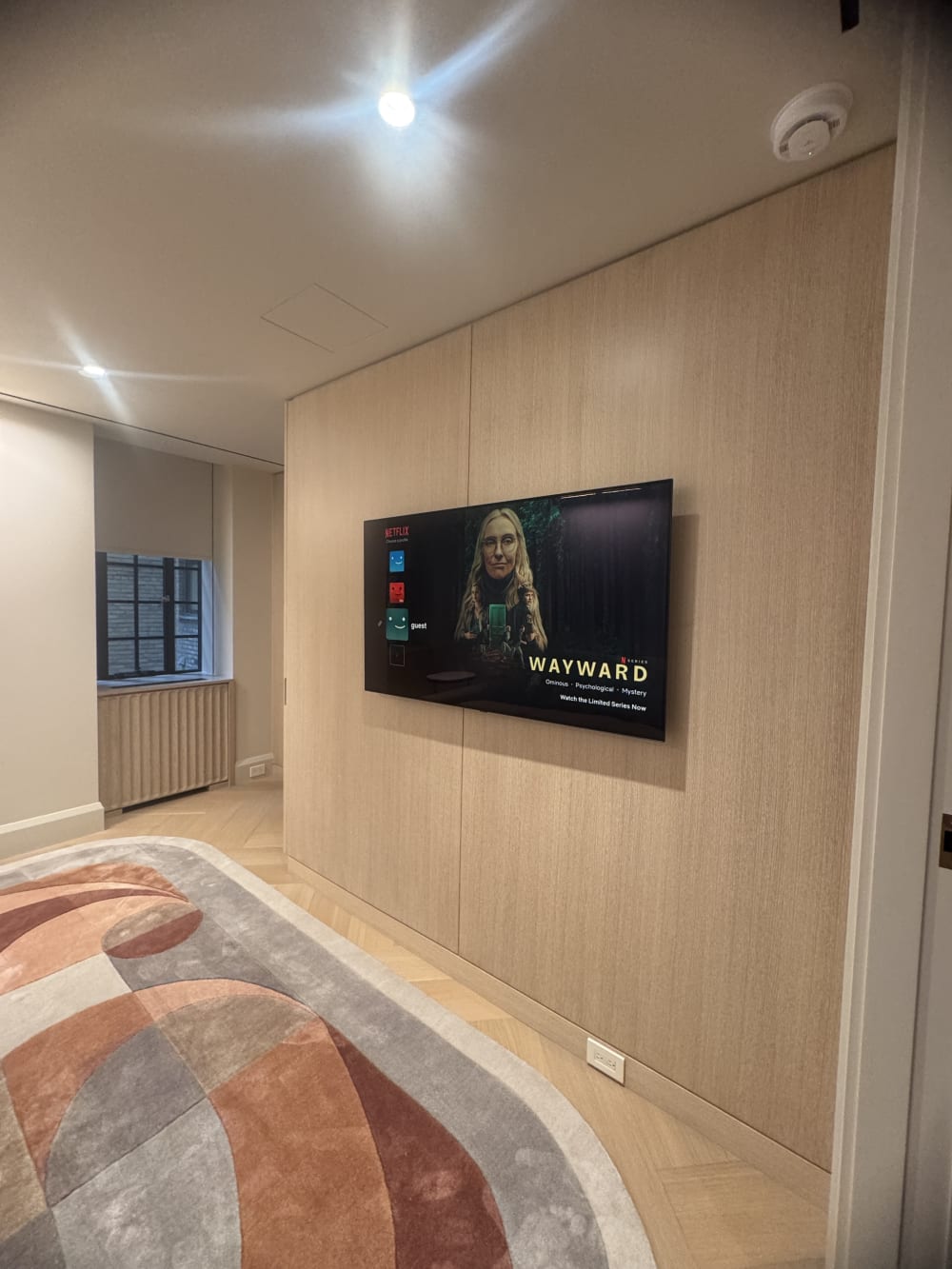
Acoustics and Speaker Placement Matter
Surround sound is not simply a matter of adding more speakers. The room needs a plan for speaker positions, seating, acoustics, and calibration so sound feels enveloping rather than loud or uneven. In a media room, the same care helps dialogue remain clear and keeps the system enjoyable at everyday listening levels.
One Scene, Not a Stack of Remotes
Entertainment should not begin with a search for remotes or a sequence of inputs. With a properly integrated smart home control system, one action can set a viewing scene: lights adjust, shades lower, the display or projector powers on, and the preferred source is ready.
The same control experience can extend into the rest of the home through whole-home audio/video, so a media room feels connected to the larger property without creating unnecessary complexity.
Plan Early for a Better-Finished Room
For new construction and major renovations, the best time to involve a technology partner is while the room and adjacent spaces are still being designed. Wiring paths, display locations, equipment ventilation, speaker back boxes, shade details, and lighting zones are easier to coordinate before walls and millwork are complete.
Early coordination is especially useful when a theater or media room needs to fit within a broader smart-home pre-construction plan. It preserves options, protects the design intent, and supports easier long-term service.
Frequently Asked Questions
What is the difference between a home theater and a media room?
A dedicated theater is designed primarily for cinematic viewing and listening, while a media room is a flexible everyday space with elevated audio and video performance. HTE designs both around the home and the way the household uses the room.
Do I need a dedicated room for a home theater?
No. A dedicated room offers more acoustic and lighting control, but many living rooms, family rooms, and lower levels can become excellent media rooms with thoughtful planning.
Can theater lighting and shades be controlled with the system?
Yes. Lighting control, motorized shades, displays, projectors, audio, and sources can be coordinated into simple viewing scenes through the home’s control system.
When should I plan a home theater during a renovation or new build?
Begin during design and pre-construction, before electrical plans, ceiling details, cabinetry, and wall finishes are finalized. That is when speaker locations, wiring, ventilation, and lighting zones can be coordinated most effectively.
Whether you are designing a cinema room or improving a shared living space, HTE can help define the right approach before the details become difficult to change.